
- Consolidated Edison recently entered into a new US$3.50 billions revolving credit facility to support its commercial paper programs and general corporate purposes, shortly after reporting Q4 2025 revenue and adjusted EPS that topped Wall Street expectations.
- Together with management’s plans for a five-year adjusted EPS compound annual growth rate of 6% to 7%, the expanded credit access highlights how the utility is prioritizing both liquidity and earnings visibility.
- We’ll now look at how this enhanced liquidity through the new revolving credit facility shapes Consolidated Edison’s broader investment narrative.
Explore 24 top quantum computing companies leading the revolution in next-gen technology and shaping the future with breakthroughs in quantum algorithms, superconducting qubits, and cutting-edge research.
What Is Consolidated Edison's Investment Narrative?
To own Consolidated Edison here, you really have to believe in a steady, regulated utility story where modest earnings growth, a long dividend record and prudent balance sheet management matter more than big upside swings. The new US$3.50 billions revolving credit facility, layered on top of February’s roughly US$775.67 million equity raise, tilts the near term catalysts even more toward balance sheet strength and funding capacity for capital projects, rather than any sudden change in growth. It likely does not materially shift the earnings outlook that underpins management’s five year EPS growth ambition, but it can ease refinancing risk and support the commercial paper program, which helps underpin that guidance. The trade off is that investors now need to watch dilution, funding costs and leverage just as closely as regulatory and rate risks.
However, investors should also consider how ongoing equity issuance might affect future per share outcomes. Consolidated Edison's shares are on the way up, but they could be overextended by 9%. Uncover the fair value now.Exploring Other Perspectives
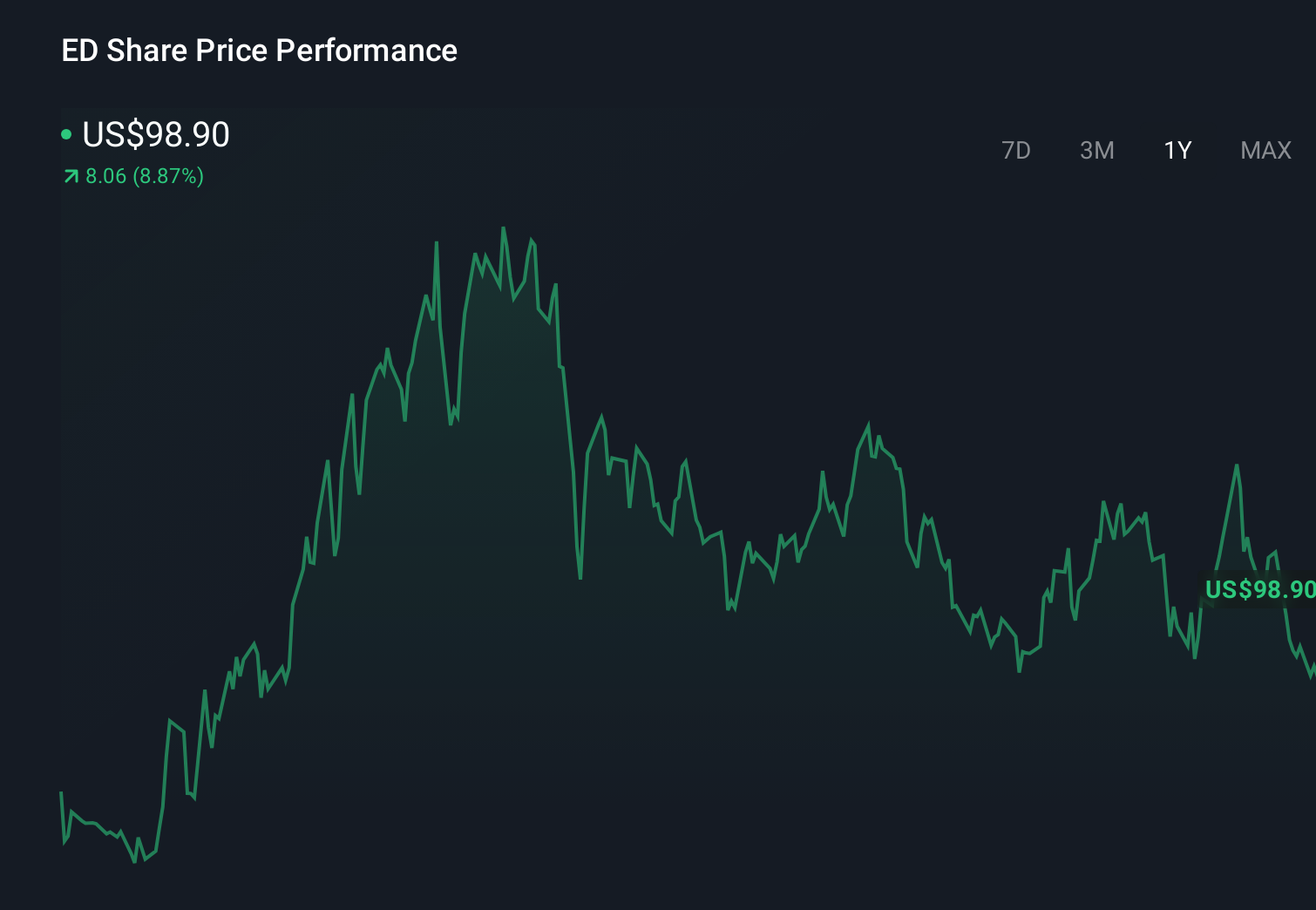
Explore 2 other fair value estimates on Consolidated Edison - why the stock might be worth as much as $110.62!
Form Your Own Verdict
Disagree with this assessment? Extraordinary investment returns rarely come from following the herd, so go with your instincts.
- A great starting point for your Consolidated Edison research is our analysis highlighting 3 key rewards and 2 important warning signs that could impact your investment decision.
- Our free Consolidated Edison research report provides a comprehensive fundamental analysis summarized in a single visual - the Snowflake - making it easy to evaluate Consolidated Edison's overall financial health at a glance.
Want Some Alternatives?
Right now could be the best entry point. These picks are fresh from our daily scans. Don't delay:
- Find 47 companies with promising cash flow potential yet trading below their fair value.
- The future of work is here. Discover the 30 top robotics and automation stocks leading the charge in AI-driven automation and industrial transformation.
- Invest in the nuclear renaissance through our list of 87 elite nuclear energy infrastructure plays powering the global AI revolution.
This article by Simply Wall St is general in nature. We provide commentary based on historical data and analyst forecasts only using an unbiased methodology and our articles are not intended to be financial advice. It does not constitute a recommendation to buy or sell any stock, and does not take account of your objectives, or your financial situation. We aim to bring you long-term focused analysis driven by fundamental data. Note that our analysis may not factor in the latest price-sensitive company announcements or qualitative material. Simply Wall St has no position in any stocks mentioned.
Have feedback on this article? Concerned about the content? Get in touch with us directly. Alternatively, email editorial-team@simplywallst.com